ห่วงโซ่อุปทานและอุปสงค์ในการผลิตและการบริโภค โดยตรงเลยครับ เพื่อให้เข้าใจลึกซึ้งขึ้นในเชิงธรรมชาติวิทยา เราจะมาเปรียบเทียบคำศัพท์เหล่านี้กับปรากฏการณ์ธรรมชาติและวงจรชีวิตต่างๆ กัน
ภาพรวม: ห่วงโซ่ชีวิตในธรรมชาติกับห่วงโซ่อุปทาน-อุปสงค์
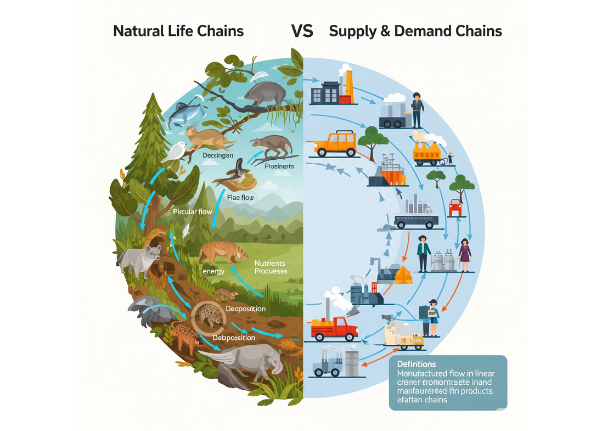
ในธรรมชาติ สิ่งมีชีวิตทุกชนิดต่างพึ่งพาอาศัยกันและกันเพื่อความอยู่รอด เช่นเดียวกับในโลกธุรกิจที่ผู้ผลิต ผู้จัดจำหน่าย และผู้บริโภคต่างเชื่อมโยงกันเป็นระบบ สิ่งเหล่านี้เรียกว่า ห่วงโซ่อุปทาน (Supply Chain) และ อุปสงค์-อุปทาน (Supply and Demand)
- ห่วงโซ่อาหาร (Food Chain) ในธรรมชาติ เปรียบเสมือน ห่วงโซ่อุปทาน (Supply Chain)
- ผู้ผลิต (Producers): พืชที่สังเคราะห์แสงสร้างอาหาร เปรียบเสมือน ผู้ผลิตสินค้า (Manufacturers) อย่างเช่นในคำศัพท์ OEM (Original Equipment Manufacturer) ที่รับจ้างผลิตสินค้าพื้นฐาน
- ผู้บริโภคอันดับต้น (Primary Consumers): สัตว์กินพืช เปรียบเสมือน B2B (Business to Business) ที่ซื้อสินค้าหรือวัตถุดิบไปแปรรูปต่อ เพื่อเพิ่มมูลค่าให้กับผลิตภัณฑ์
- ผู้บริโภคอันดับรองและอันดับสาม (Secondary & Tertiary Consumers): สัตว์กินเนื้อ หรือผู้ล่าที่กินสัตว์กินพืช เปรียบเสมือน B2C (Business to Consumer) หรือ Modern Trade ที่นำสินค้าสำเร็จรูปไปถึงมือผู้บริโภคคนสุดท้าย
- ผู้ย่อยสลาย (Decomposers): เชื้อรา แบคทีเรีย ที่ช่วยย่อยสลายซากสิ่งมีชีวิตให้กลับคืนสู่ธรรมชาติ เปรียบได้กับการ รีไซเคิล (Recycling) หรือ การจัดการของเสีย (Waste Management) ในธุรกิจ ที่ทำให้ทรัพยากรหมุนเวียนกลับมาใช้ใหม่ได้ หรือการที่ธุรกิจต้องปรับตัว เปลี่ยนแปลง เพื่อให้สามารถไปต่อได้
- ความสมดุลของระบบนิเวศ (Ecosystem Balance) เปรียบเสมือน ความสมดุลของอุปสงค์และอุปทาน (Supply and Demand Balance)
- เมื่อมีอาหารเพียงพอ (อุปทานสูง) จำนวนประชากรสัตว์ก็จะเพิ่มขึ้น (อุปสงค์เพิ่ม)
- เมื่ออาหารขาดแคลน (อุปทานต่ำ) จำนวนประชากรสัตว์ก็จะลดลง (อุปสงค์ลด)
- ในทางธุรกิจก็เช่นกัน หากมีสินค้ามากเกินไป (อุปทานสูง) แต่ความต้องการน้อย (อุปสงค์ต่ำ) ราคาก็จะลดลง แต่ถ้าสินค้าหายาก (อุปทานต่ำ) และมีความต้องการสูง (อุปสงค์สูง) ราคาก็จะสูงขึ้น
เจาะลึกคำศัพท์กับการเปรียบเทียบเชิงธรรมชาติวิทยา
1. Business Deal (ข้อตกลงทางธุรกิจ) * ธรรมชาติวิทยา: เปรียบเหมือนกับการ ** symbiosis (การอยู่ร่วมกันแบบพึ่งพาอาศัย)** ในธรรมชาติ เช่น ดอกไม้กับผึ้งที่ต่างฝ่ายต่างได้ประโยชน์ (ผึ้งได้น้ำหวาน ดอกไม้ได้ผสมเกสร) ทั้งสองฝ่ายมีการ “ตกลง” กันโดยธรรมชาติที่จะมีปฏิสัมพันธ์กันเพื่อความอยู่รอด * ในธุรกิจ: การที่สองบริษัทตกลงจะร่วมมือกันเพื่อผลประโยชน์ร่วมกัน ไม่ว่าจะเป็นการซื้อ-ขาย, การร่วมทุน, หรือการแบ่งปันทรัพยากร
2. Strategic Partner (หุ้นส่วนหรือพันธมิตรเชิงกลยุทธ์) * ธรรมชาติวิทยา: คล้ายกับการที่สัตว์ต่างชนิดกันร่วมมือกันล่าเหยื่อ เช่น นกพิกุลกับวัว (นกได้กินแมลงบนตัววัว วัวได้กำจัดปรสิต) หรือการที่สิ่งมีชีวิตบางชนิดอาศัยอยู่ในแหล่งที่อยู่เดียวกันเพื่อป้องกันภัยจากผู้ล่า ทั้งสองฝ่ายมี “กลยุทธ์” ในการดำรงชีวิตร่วมกันเพื่อเสริมสร้างความแข็งแกร่ง * ในธุรกิจ: การที่บริษัทสองแห่งหรือมากกว่านั้นจับมือกันเพื่อเป้าหมายทางธุรกิจระยะยาวที่ใหญ่กว่าการทำงานคนเดียว เช่น การเข้าถึงตลาดใหม่ การลดต้นทุน หรือการพัฒนาผลิตภัณฑ์ใหม่
3. Modern Trade (การค้าปลีกสมัยใหม่) * ธรรมชาติวิทยา: เปรียบเหมือนกับการ กระจายพันธุ์ของพืชแบบรวดเร็วและมีประสิทธิภาพสูง เช่น เมล็ดที่ปลิวไปได้ไกล หรือผลไม้ที่สัตว์กินแล้วขับถ่ายเมล็ดออกมาในที่ต่างๆ ทำให้พืชสามารถแพร่กระจายและเข้าถึงพื้นที่ที่เหมาะสมกับการเติบโตได้อย่างรวดเร็วและกว้างขวาง * ในธุรกิจ: การใช้ช่องทางการจัดจำหน่ายที่ทันสมัยและมีประสิทธิภาพสูง เช่น ห้างสรรพสินค้า ซูเปอร์มาร์เก็ต ร้านสะดวกซื้อขนาดใหญ่ ซึ่งช่วยให้สินค้าเข้าถึงผู้บริโภคจำนวนมากได้อย่างรวดเร็วและมีต้นทุนการกระจายสินค้าที่ต่ำลง
4. Digital Marketing (การทำการตลาดโดยใช้เทคโนโลยี) * ธรรมชาติวิทยา: เปรียบเสมือนการที่ สัตว์สื่อสารกันด้วยสัญญาณต่างๆ เช่น เสียง กลิ่น การแสดงออกทางร่างกาย เพื่อดึงดูดคู่ หรือเพื่อแจ้งเตือนภัย การใช้เทคโนโลยีในการสื่อสารที่ทำให้ข่าวสารกระจายไปได้รวดเร็วและเฉพาะเจาะจงมากขึ้น เหมือนผีเสื้อกลางคืนที่ปล่อยฟีโรโมนเพื่อดึงดูดคู่จากระยะไกล หรือนกที่ส่งเสียงเรียกหาคู่ * ในธุรกิจ: การใช้ช่องทางดิจิทัล เช่น โซเชียลมีเดีย เว็บไซต์ อีเมล เพื่อเข้าถึงกลุ่มเป้าหมายจำนวนมากได้อย่างแม่นยำและรวดเร็ว
5. Franchise (แฟรนไชส์) * ธรรมชาติวิทยา: คล้ายกับการ โคลนิ่ง (Cloning) หรือการแตกหน่อของพืช ที่มีโครงสร้างและคุณสมบัติเหมือนต้นแบบทุกประการ ทำให้สามารถขยายพันธุ์ไปได้ในวงกว้างโดยยังคงลักษณะเด่นของต้นกำเนิดไว้ * ในธุรกิจ: การที่ธุรกิจแม่มอบสิทธิ์ให้ผู้ประกอบการรายย่อยนำชื่อ แบรนด์ และระบบการดำเนินงานไปใช้ เพื่อขยายสาขาและเข้าถึงตลาดใหม่ๆ โดยยังคงความเป็นเอกลักษณ์ของแบรนด์แม่ไว้
6. Merchandise (การขายสินค้า) * ธรรมชาติวิทยา: นี่คือแก่นของ การแลกเปลี่ยนในระบบนิเวศ เช่น การที่สัตว์กินผลไม้แล้วช่วยกระจายเมล็ดพืช หรือการที่สิ่งมีชีวิตต่างชนิดกันแลกเปลี่ยนทรัพยากร (เช่น ปูเสฉวนใช้เปลือกหอยเพื่อเป็นที่อยู่อาศัย) เป็นการ “ขาย” หรือ “แลกเปลี่ยน” สิ่งที่มีอยู่เพื่อสิ่งที่ต้องการ * ในธุรกิจ: กิจกรรมการนำสินค้าหรือบริการไปนำเสนอและขายให้กับลูกค้าโดยตรง
7. OEM (Original Equipment Manufacturer) (การรับจ้างผลิตสินค้า) * ธรรมชาติวิทยา: เปรียบเสมือน เซลล์เม็ดเลือดแดงในร่างกาย ที่ทำหน้าที่ผลิตและขนส่งออกซิเจนไปยังส่วนต่างๆ ของร่างกาย โดยไม่ได้มีหน้าที่ตัดสินใจว่าจะส่งไปที่ไหน แต่ทำตามคำสั่งจากสมองและร่างกาย หรืออีกตัวอย่างคือ โรงงานผลิตน้ำตาลในใบพืช ที่ผลิตน้ำตาลซึ่งเป็นพลังงานให้กับต้นไม้ทั้งหมด * ในธุรกิจ: บริษัทที่ผลิตสินค้าตามแบบหรือมาตรฐานที่ลูกค้ากำหนดให้ โดยสินค้าเหล่านั้นจะถูกนำไปติดแบรนด์ของลูกค้าและขายต่อ
8. SOD (Standing Order) (การยืนยันจำนวนสั่งซื้อ) * ธรรมชาติวิทยา: คล้ายกับการ กำหนดพฤติกรรมการอพยพย้ายถิ่นของสัตว์ เช่น นกที่รู้ว่าต้องบินไปที่ไหนในช่วงเวลาใดเพื่อหาอาหาร หรือการที่พืชมีวงจรการออกดอกออกผลในแต่ละฤดูกาล เป็นการ “ยืนยัน” ว่าจะมีผลผลิตหรือกิจกรรมเกิดขึ้นตามช่วงเวลาและจำนวนที่คาดการณ์ไว้ * ในธุรกิจ: การที่ลูกค้า (ส่วนใหญ่เป็น B2B) ยืนยันจำนวนการสั่งซื้อสินค้าล่วงหน้าในปริมาณที่แน่นอน เพื่อให้ผู้ผลิตสามารถวางแผนการผลิตและการจัดส่งได้อย่างมีประสิทธิภาพ
9. B2B (Business to Business) (การค้าระหว่างผู้ประกอบการ) * ธรรมชาติวิทยา: เปรียบเสมือน ห่วงโซ่อาหารในระดับจุลภาค หรือ การพึ่งพาอาศัยกันของสิ่งมีชีวิตขนาดเล็กในระบบนิเวศ เช่น แบคทีเรียในลำไส้ใหญ่ของสัตว์เคี้ยวเอื้องที่ช่วยย่อยอาหาร หรือการที่เห็ดราบางชนิดช่วยย่อยสลายอินทรียวัตถุในดินให้พืชนำไปใช้ได้ สิ่งเหล่านี้ไม่ใช่การบริโภคโดยตรง แต่เป็นการแปรรูปหรือส่งต่อเพื่อสร้างมูลค่าเพิ่มให้กับสิ่งอื่น * ในธุรกิจ: การซื้อขายสินค้าหรือบริการระหว่างบริษัทด้วยกัน เพื่อนำไปใช้เป็นวัตถุดิบในการผลิตต่อ หรือเพื่อจำหน่ายต่อให้กับลูกค้ารายย่อย
10. B2C (Business to Consumer) (การค้าระหว่างผู้ค้าถึงผู้บริโภคโดยตรง) * ธรรมชาติวิทยา: นี่คือ จุดสิ้นสุดของห่วงโซ่อาหาร หรือ การบริโภคขั้นสุดท้าย เช่น เสือที่ล่ากวางมากิน หรือสัตว์กินพืชที่กินใบไม้ เป็นการบริโภคเพื่อการดำรงชีวิตโดยตรง * ในธุรกิจ: การขายสินค้าหรือบริการโดยตรงให้กับผู้บริโภคคนสุดท้าย เพื่อนำไปอุปโภคบริโภคส่วนตัว
บทสรุป
การทำความเข้าใจคำศัพท์ทางธุรกิจเหล่านี้ในเชิงธรรมชาติวิทยา ช่วยให้เราเห็นภาพรวมของ ระบบนิเวศทางธุรกิจ ที่มีการพึ่งพาอาศัย การแข่งขัน และการปรับตัวอยู่ตลอดเวลา เช่นเดียวกับธรรมชาติที่สิ่งมีชีวิตต่างต้องหาทางอยู่รอดและส่งต่อเผ่าพันธุ์ การทำธุรกิจก็ต้องมีการปรับตัว สร้างพันธมิตร และเข้าใจกลไกของอุปสงค์อุปทาน เพื่อให้ธุรกิจดำรงอยู่และเติบโตได้อย่างยั่งยืนครับ
Natural Life Chains vs. Supply and Demand Chains
Let’s break down the analogy between natural life chains and supply and demand chains in English, connecting it to the business terms you’ve provided.
Understanding the Core Analogy
In essence, the intricate web of life in nature operates much like the economic principles of supply and demand. Every organism plays a role, creating a dynamic system of give and take, just as businesses and consumers interact to form a market.
Natural Food Chain (ห่วงโซ่อาหาร) can be seen as the Supply Chain (ห่วงโซ่อุปทาน).
Producers (ผู้ผลิต): Plants that create their own food through photosynthesis are like manufacturers or OEM (Original Equipment Manufacturer) businesses that produce the foundational goods.
Primary Consumers (ผู้บริโภคอันดับต้น): Herbivores that eat plants are similar to B2B (Business to Business) entities. They acquire primary goods or raw materials to transform them into something more valuable.
Secondary & Tertiary Consumers (ผู้บริโภคอันดับรองและอันดับสาม): Carnivores that eat other animals represent B2C (Business to Consumer) or Modern Trade. They are the final link, bringing the finished “product” to the ultimate consumer.
Decomposers (ผู้ย่อยสลาย): Fungi and bacteria that break down dead organisms, returning nutrients to the ecosystem, are like recycling or waste management in business. They ensure resources can be re-utilized, or they represent a business’s adaptation and evolution to survive.
Ecosystem Balance (ความสมดุลของระบบนิเวศ) mirrors the Balance of Supply and Demand (ความสมดุลของอุปสงค์และอุปทาน).
When food is abundant (high supply), animal populations grow (demand increases).
When food is scarce (low supply), animal populations decrease (demand drops).
Similarly in business, if there’s too much product (high supply) but low demand, prices fall. Conversely, if a product is rare (low supply) but highly desired (high demand), prices rise.
Connecting Business Terms to Nature
Let’s delve into the specific business terms you mentioned and their natural analogies:
1. Business Deal (ข้อตกลงทางธุรกิจ) * Natural Analogy: This is akin to symbiosis in nature, where different organisms form mutually beneficial relationships, like bees and flowers. Both “agree” through natural selection to interact for survival and mutual benefit.
2. Strategic Partner (หุ้นส่วนหรือพันธมิตรเชิงกลยุทธ์) * Natural Analogy: Think of cooperative hunting among different species or the co-existence of different species in a shared habitat for mutual protection. They form a “strategy” for survival and strength.
3. Modern Trade (การค้าปลีกสมัยใหม่) * Natural Analogy: This resembles the efficient and rapid dispersal of plant seeds. Whether carried by wind or consumed and dispersed by animals, seeds reach suitable growing areas quickly and widely, maximizing reach.
4. Digital Marketing (การทำการตลาดโดยใช้เทคโนโลยี) * Natural Analogy: This is like how animals communicate using various signals—sounds, scents, or visual displays—to attract mates or warn of danger. It’s using technology to spread a message widely and precisely, much like a moth emitting pheromones to attract a mate from afar.
5. Franchise (แฟรนไชส์) * Natural Analogy: Similar to cloning or budding in plants, where new growths retain the exact characteristics of the parent plant. This allows for widespread proliferation while maintaining the original’s integrity.
6. Merchandise (การขายสินค้า) * Natural Analogy: This is the core of exchange within an ecosystem. Think of animals dispersing seeds after eating fruit, or hermit crabs using discarded shells. It’s the act of “selling” or “exchanging” what one has for what one needs.
7. OEM (Original Equipment Manufacturer) (การรับจ้างผลิตสินค้า) * Natural Analogy: This is like the red blood cells in a body, producing and transporting oxygen to various parts without deciding where to send it—they follow the body’s command. Or consider the sugar factories within plant leaves, producing energy for the entire plant.
8. SOD (Standing Order) (การยืนยันจำนวนสั่งซื้อ) * Natural Analogy: This is similar to the established migratory patterns of birds that know where and when to fly for food, or the seasonal cycles of plants flowering and fruiting. It’s a “confirmation” that a certain yield or activity will occur at an anticipated time and quantity.
9. B2B (Business to Business) (การค้าระหว่างผู้ประกอบการ) * Natural Analogy: This mirrors microbial food chains or the interdependence of small organisms within an ecosystem. For example, bacteria in a ruminant’s gut help digest food, or fungi decompose organic matter for plants to use. These aren’t direct consumption but transformations or transfers to add value.
10. B2C (Business to Consumer) (การค้าระหว่างผู้ค้าถึงผู้บริโภคโดยตรง) * Natural Analogy: This represents the end of the food chain or final consumption. Think of a lion hunting a gazelle for food, or an herbivore eating leaves. It’s direct consumption for survival.
Understanding these business concepts through the lens of natural science helps us grasp the fundamental principles of a business ecosystem, where interdependence, competition, and adaptation are constant, just as they are in nature. For a business to thrive, it must adapt, form partnerships, and understand the dynamics of supply and demand, ensuring its sustainable growth.
ชานบ้านชานเมืองเรียบเรียง
About The Author